

Contact

CLOSING LOOPS
Challenges & Solutions
Closing the loop on packaging
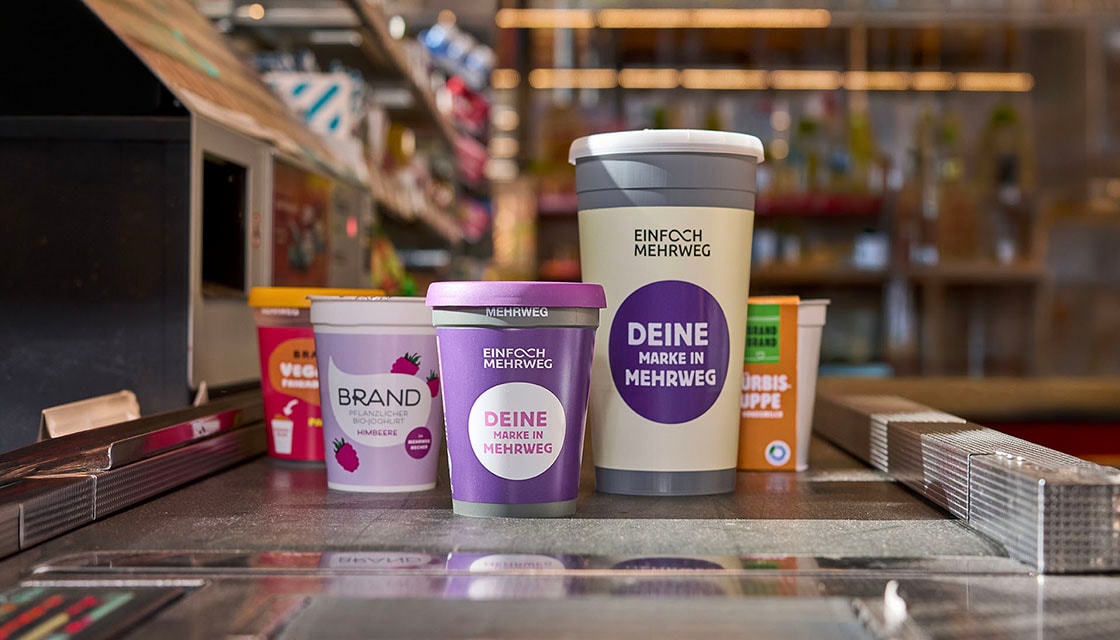
Our current economic model is pushing the planet to its breaking point. We urgently need to transition to a true circular economy—one that operates within the earth's natural limits and secures our future.
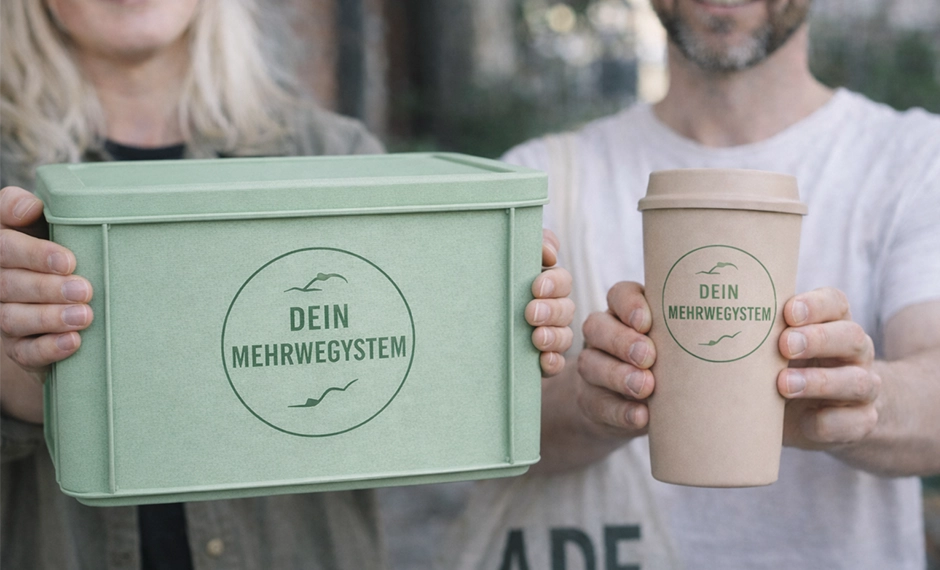
In the packaging sector, reusable systems are the key. By keeping materials in continuous circulation, we eliminate waste and dramatically reduce our environmental impact.

Downcycling is not a solution
New regulations like the EU’s PPWR, packaging taxes, and mandates for reusable options are actively forcing a shift to close resource loops. This push is essential because traditional recycling for single-use plastics is insufficient.
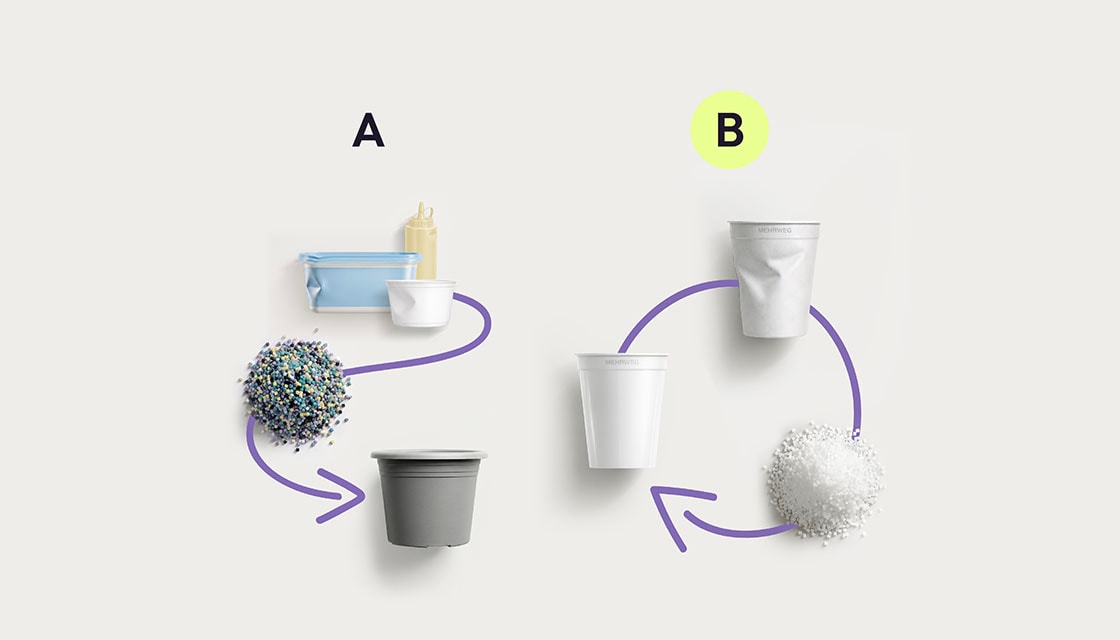
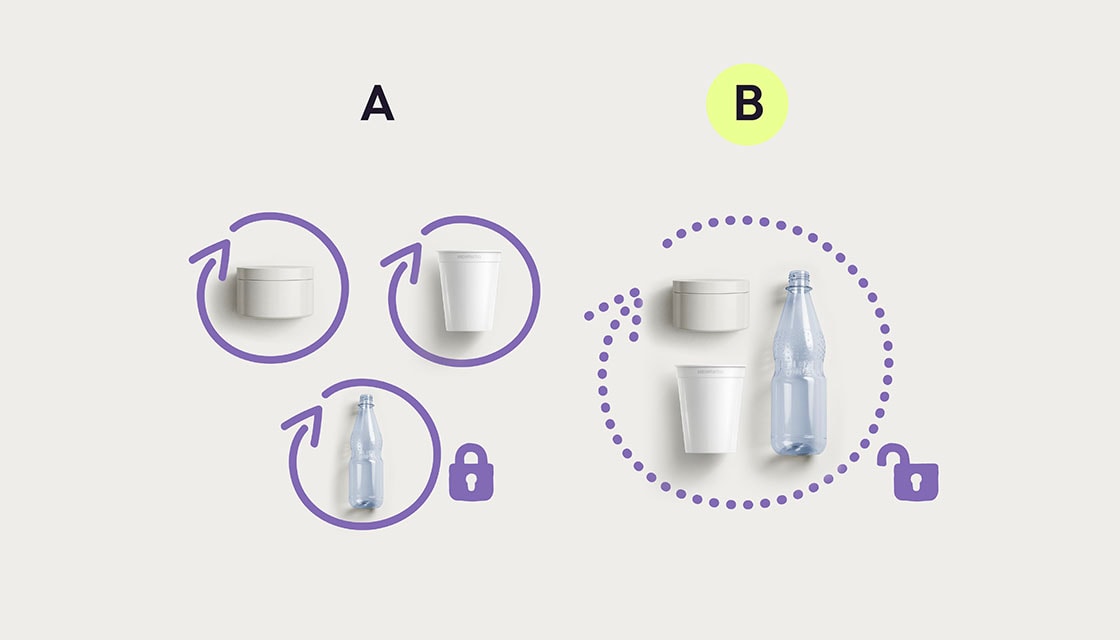
With endless variations in plastic types, chemicals, and colors, standard recycling is expensive, inefficient, and rarely produces food-safe materials. Instead of true circularity, this usually results in downcycling, yielding lower-quality materials that are unsuitable for reuse in food packaging.
The only proven exceptions are deposit-backed systems, like reusable beverage containers and single-use PET bottles, where standardized materials make high-quality, continuous recycling a reality.

AI assisted
Reuse first, recycle later
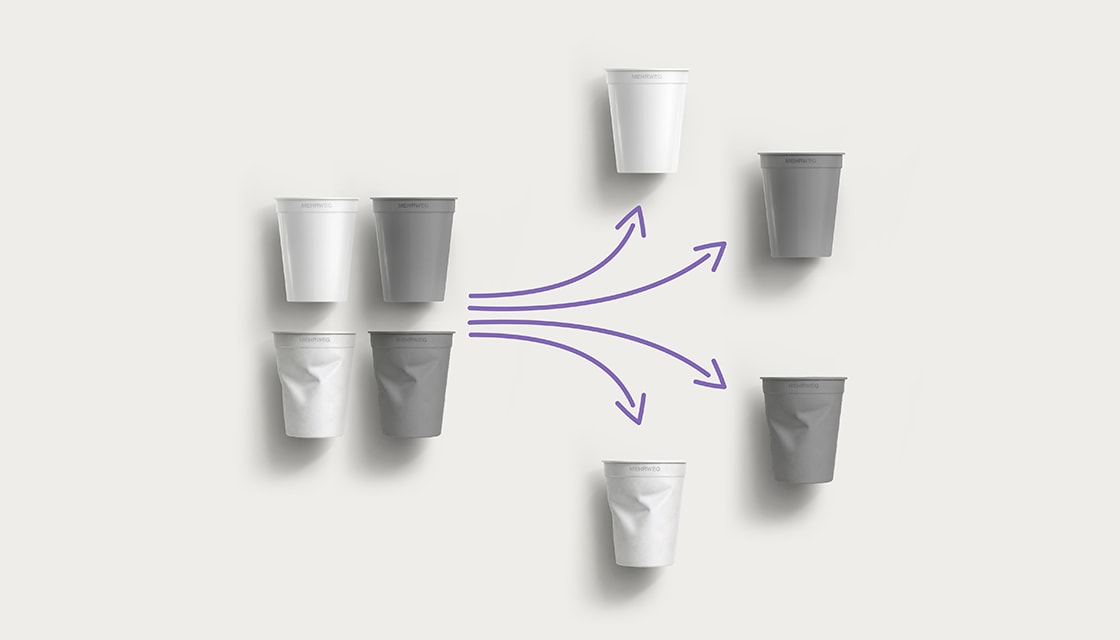
Reusability is about maximizing resources: the more trips a container makes, the better for the planet. But what happens when a container gets damaged? Before cleaning, every unit undergoes a strict inspection. Containers that can no longer be used are removed from the system and sent for high-grade recycling. Because we rely on large quantities of standardized materials, these retired containers don’t need to be downcycled. Instead, their material is recaptured and molded into new reusable packaging, keeping valuable resources in continuous motion.

AI assisted
Simplicity is the key
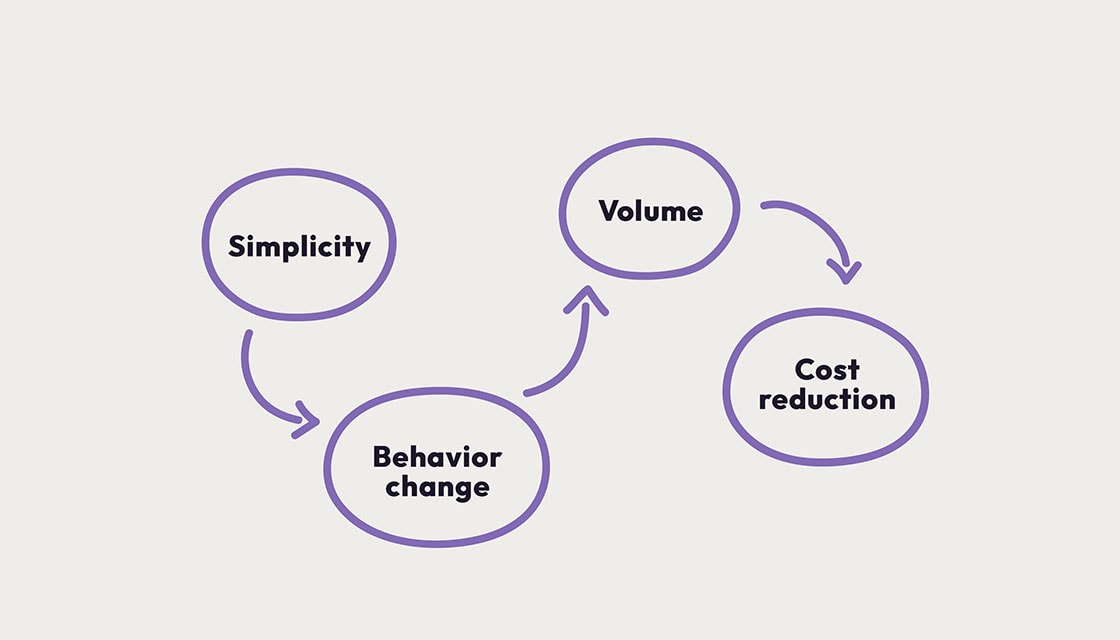
For reusable systems to succeed, they must fit seamlessly into consumers' daily routines. When reuse is effortless, behavior changes naturally, and more packaging stays in the loop. This convenience is the key to scaling up.
The easier the system is to use, the higher the return rates. And as volume grows, the reusable model's superiority over single-use becomes undeniable, both for the planet and the bottom line.
Reuse systems in isolation fail
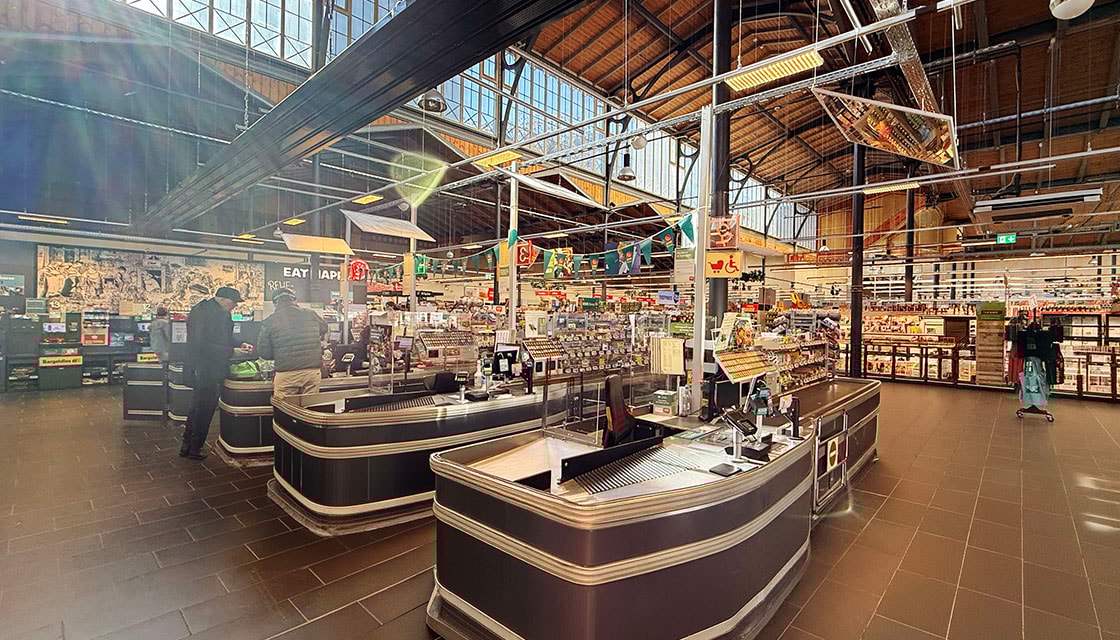
Restaurateurs, food manufacturers, retailers, and ambitious system operators all approach reusable packaging differently, seeking to optimize a system for their own specific needs. However, new reusable systems designed strictly from an individual perspective inevitably fail as isolated solutions because they overlook two key realities: (1) Sufficient volumes cannot be achieved in isolation, and (2) Everyday practicality is lost for other participants in the system.
Get involved
Reusable systems only scale if they work for all




Contact
CLOSING LOOPS
Challenges & Solutions
Closing the loop on packaging
Our current economic model is pushing the planet to its breaking point. We urgently need to transition to a true circular economy—one that operates within the earth's natural limits and secures our future.
In the packaging sector, reusable systems are the key. By keeping materials in continuous circulation, we eliminate waste and dramatically reduce our environmental impact.
Downcycling is not a solution
New regulations like the EU’s PPWR, packaging taxes, and mandates for reusable options are actively forcing a shift to close resource loops. This push is essential because traditional recycling for single-use plastics is insufficient.
With endless variations in plastic types, chemicals, and colors, standard recycling is expensive, inefficient, and rarely produces food-safe materials. Instead of true circularity, this usually results in downcycling, yielding lower-quality materials that are unsuitable for reuse in food packaging.
The only proven exceptions are deposit-backed systems, like reusable beverage containers and single-use PET bottles, where standardized materials make high-quality, continuous recycling a reality.
AI assisted
Reuse first, recycle later
Reusability is about maximizing resources: the more trips a container makes, the better for the planet. But what happens when a container gets damaged? Before cleaning, every unit undergoes a strict inspection. Containers that can no longer be used are removed from the system and sent for high-grade recycling. Because we rely on large quantities of standardized materials, these retired containers don’t need to be downcycled. Instead, their material is recaptured and molded into new reusable packaging, keeping valuable resources in continuous motion.
AI assisted
Simplicity is the key
For reusable systems to succeed, they must fit seamlessly into consumers' daily routines. When reuse is effortless, behavior changes naturally, and more packaging stays in the loop. This convenience is the key to scaling up.
The easier the system is to use, the higher the return rates. And as volume grows, the reusable model's superiority over single-use becomes undeniable, both for the planet and the bottom line.
Reuse systems in isolation fail
Restaurateurs, food manufacturers, retailers, and ambitious system operators all approach reusable packaging differently, seeking to optimize a system for their own specific needs. However, new reusable systems designed strictly from an individual perspective inevitably fail as isolated solutions because they overlook two key realities: (1) Sufficient volumes cannot be achieved in isolation, and (2) Everyday practicality is lost for other participants in the system.
Get involved
Reusable systems only scale if they work for all


EN
Contact
CLOSING LOOPS
Challenges & Solutions
Closing the loop on packaging
Our current economic model is pushing the planet to its breaking point. We urgently need to transition to a true circular economy—one that operates within the earth's natural limits and secures our future.
In the packaging sector, reusable systems are the key. By keeping materials in continuous circulation, we eliminate waste and dramatically reduce our environmental impact.
AI assisted
Downcycling is not a solution
New regulations like the EU’s PPWR, packaging taxes, and mandates for reusable options are actively forcing a shift to close resource loops. This push is essential because traditional recycling for single-use plastics is insufficient.
With endless variations in plastic types, chemicals, and colors, standard recycling is expensive, inefficient, and rarely produces food-safe materials. Instead of true circularity, this usually results in downcycling, yielding lower-quality materials that are unsuitable for reuse in food packaging.
The only proven exceptions are deposit-backed systems, like reusable beverage containers and single-use PET bottles, where standardized materials make high-quality, continuous recycling a reality.
Reuse first, recycle later
Reusability is about maximizing resources: the more trips a container makes, the better for the planet. But what happens when a container gets damaged? Before cleaning, every unit undergoes a strict inspection. Containers that can no longer be used are removed from the system and sent for high-grade recycling. Because we rely on large quantities of standardized materials, these retired containers don’t need to be downcycled. Instead, their material is recaptured and molded into new reusable packaging, keeping valuable resources in continuous motion.
AI assisted
Simplicity is the key
For reusable systems to succeed, they must fit seamlessly into consumers' daily routines. When reuse is effortless, behavior changes naturally, and more packaging stays in the loop. This convenience is the key to scaling up.
The easier the system is to use, the higher the return rates. And as volume grows, the reusable model's superiority over single-use becomes undeniable, both for the planet and the bottom line.
Reuse systems in isolation fail
Restaurateurs, food manufacturers, retailers, and ambitious system operators all approach reusable packaging differently, seeking to optimize a system for their own specific needs. However, new reusable systems designed strictly from an individual perspective inevitably fail as isolated solutions because they overlook two key realities: (1) Sufficient volumes cannot be achieved in isolation, and (2) Everyday practicality is lost for other participants in the system.
Get involved
Reusable systems only scale if they work for all
EN
Contact
CLOSING LOOPS
Challenges & Solutions
Closing the loop on packaging
Our current economic model is pushing the planet to its breaking point. We urgently need to transition to a true circular economy—one that operates within the earth's natural limits and secures our future.
In the packaging sector, reusable systems are the key. By keeping materials in continuous circulation, we eliminate waste and dramatically reduce our environmental impact.
AI assisted
Downcycling is not a solution
New regulations like the EU’s PPWR, packaging taxes, and mandates for reusable options are actively forcing a shift to close resource loops. This push is essential because traditional recycling for single-use plastics is insufficient.
With endless variations in plastic types, chemicals, and colors, standard recycling is expensive, inefficient, and rarely produces food-safe materials. Instead of true circularity, this usually results in downcycling, yielding lower-quality materials that are unsuitable for reuse in food packaging.
The only proven exceptions are deposit-backed systems, like reusable beverage containers and single-use PET bottles, where standardized materials make high-quality, continuous recycling a reality.
Reuse first, recycle later
Reusability is about maximizing resources: the more trips a container makes, the better for the planet. But what happens when a container gets damaged? Before cleaning, every unit undergoes a strict inspection. Containers that can no longer be used are removed from the system and sent for high-grade recycling. Because we rely on large quantities of standardized materials, these retired containers don’t need to be downcycled. Instead, their material is recaptured and molded into new reusable packaging, keeping valuable resources in continuous motion.
AI assisted
Simplicity is the key
For reusable systems to succeed, they must fit seamlessly into consumers' daily routines. When reuse is effortless, behavior changes naturally, and more packaging stays in the loop. This convenience is the key to scaling up.
The easier the system is to use, the higher the return rates. And as volume grows, the reusable model's superiority over single-use becomes undeniable, both for the planet and the bottom line.
Reuse systems in isolation fail
Restaurateurs, food manufacturers, retailers, and ambitious system operators all approach reusable packaging differently, seeking to optimize a system for their own specific needs. However, new reusable systems designed strictly from an individual perspective inevitably fail as isolated solutions because they overlook two key realities: (1) Sufficient volumes cannot be achieved in isolation, and (2) Everyday practicality is lost for other participants in the system.