REUSE
Packaging meets requirements of product categories, collection and service processes
Contact

for designing, evaluating and optimising circular reuse systems
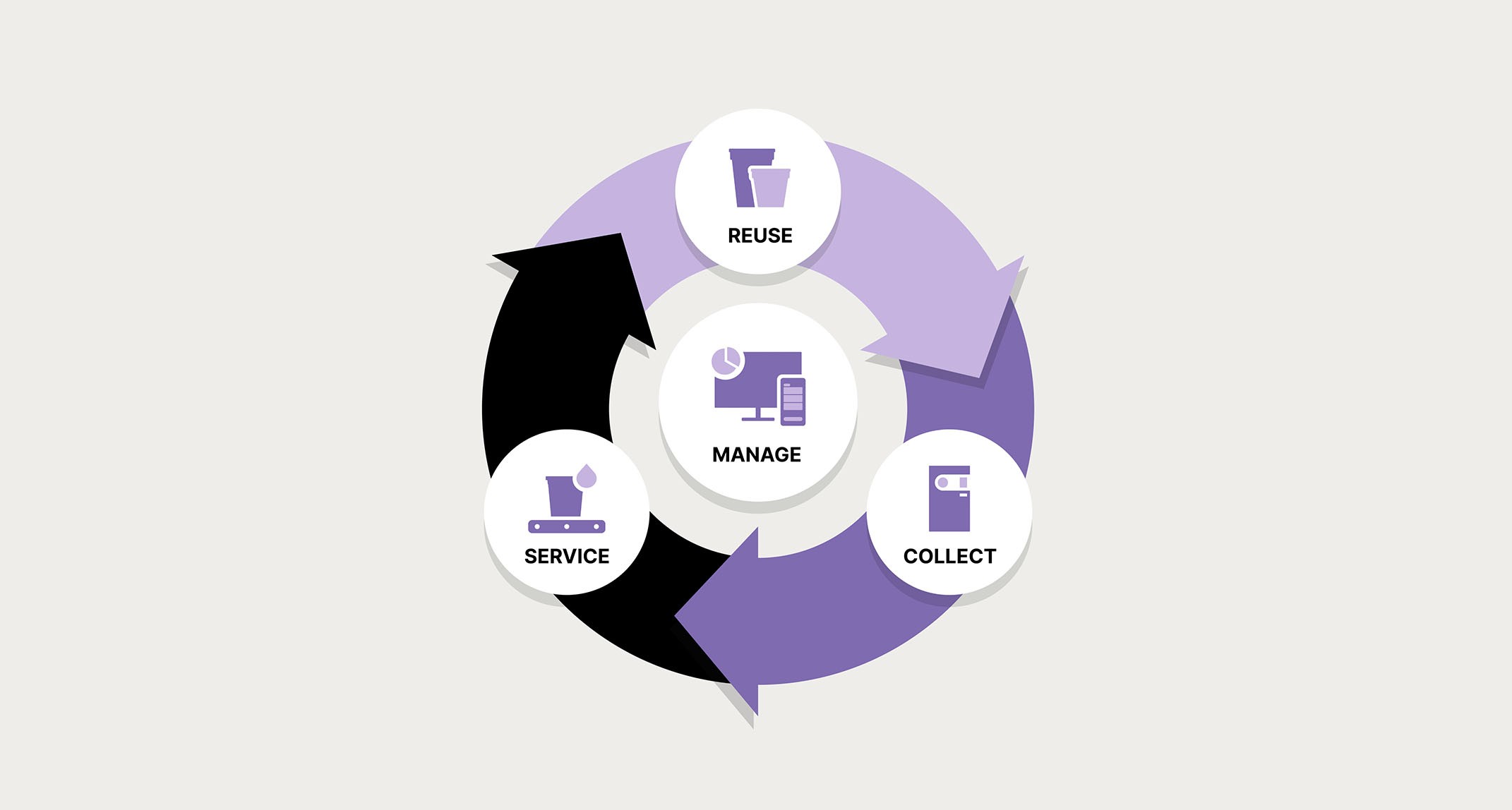
To achieve simplicity for all stakeholders, packaging and system partner requirements must be considered, and thus all four value domains of any reuse system.
The value domains create systemic value, but also drive costs. To minimise cost in each domain, the domains must be integrated and volumes must be maximised.
Packaging meets requirements of product categories, collection and service processes
Convenient collection and reverse logistics processes
Pool care through sorting, cleaning and end-of-life recycling
Automation of circular workflows through asset tracing and partner integration

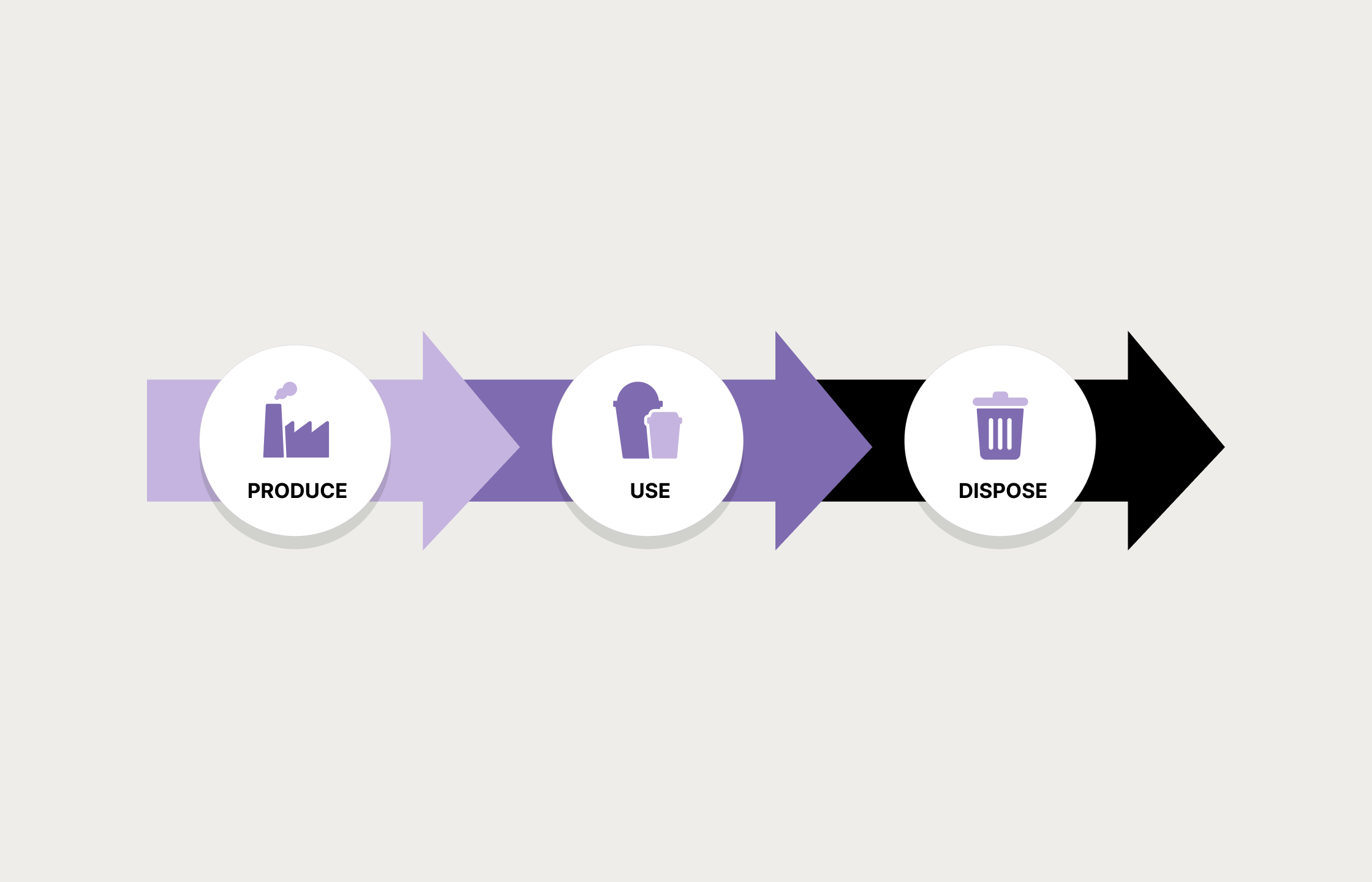
Produce, use, dispose — that’s single-use. The variety of materials, additives and colors in single-use packaging makes separation economically hard to impossible. Recycling fails.
At the same time, the time of packaging usage is very short and volumes are enormous: the waste problem keeps growing.
Single-use recycling is often just downcycling, as only a fraction of the material employed is reused at equivalent quality.
Single-use recycling is often just downcycling, as only a fraction of the material employed is reused at equivalent quality.
A single-use exception: deposit PET beverage bottles and aluminium beverage cans motivate returns. The standardised material can be repeatedly used in a food-safe manner for beverages.
These prerequisites are found in every holistically designed reuse system, which is why reuse has no recycling problem.
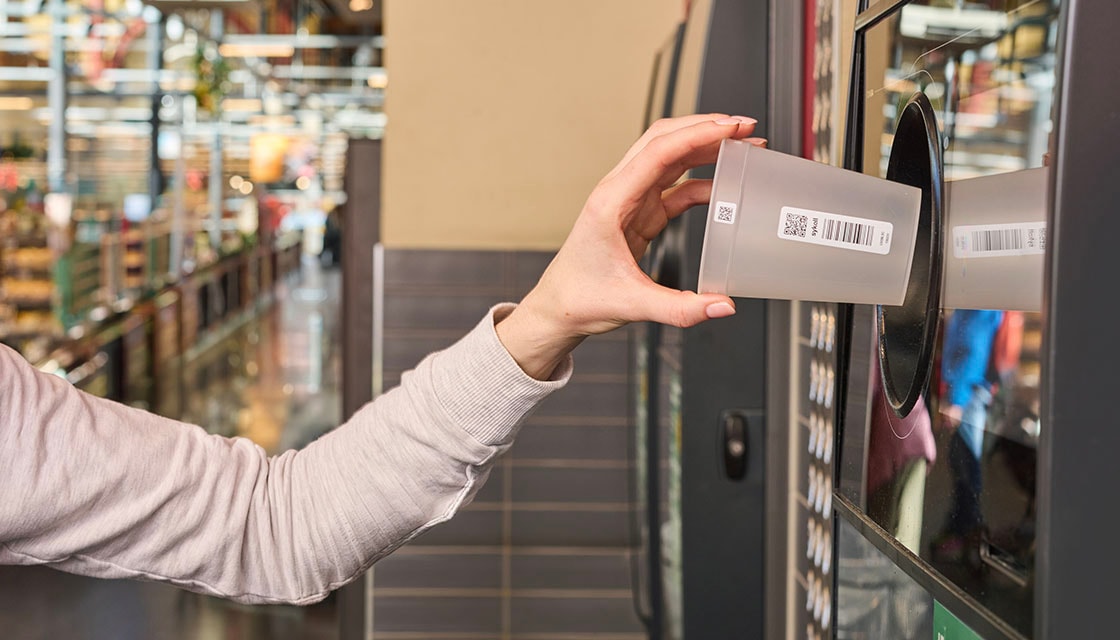
Reuse systems replace packaging disposal with return, making it a tool of the Circular Economy. The fundamentals of reuse always work the same way: use, collect, clean, repeat.
Only at the end of a reusable container's life is it recycled after being sorted out: new reusable packaging is created.
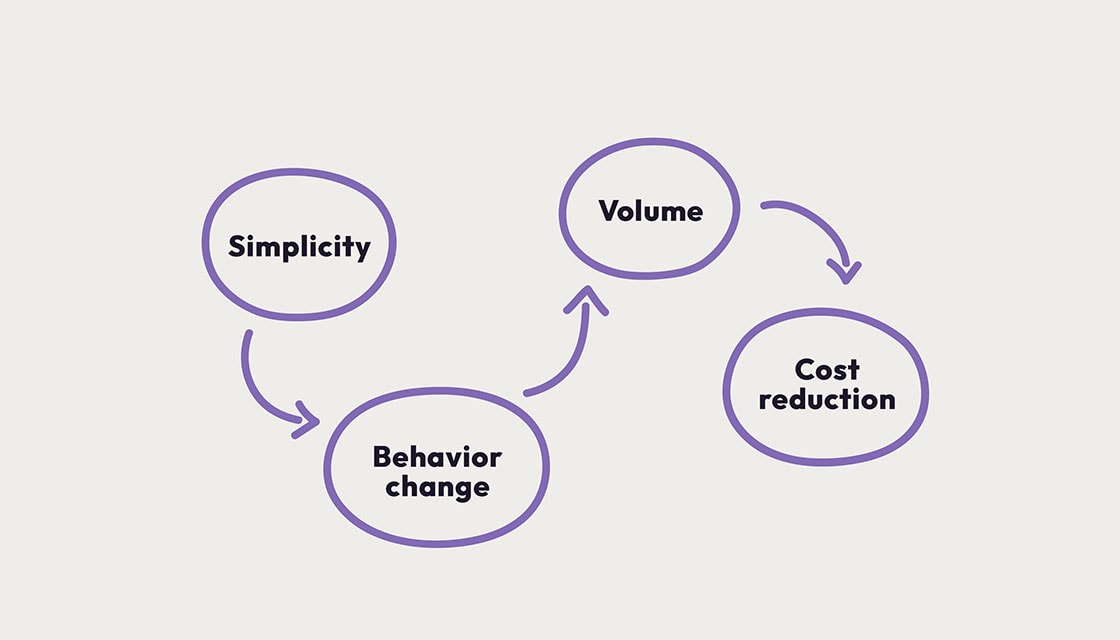
Reuse systems unfold their full potential at scale, ecologically and economically. For this, systems must be cost-optimised through high volumes.
Simplicity enables daily routines, which in turn enable the crucial behavioural change: returning instead of throwing away. Behavioural change at scale leads to volumes that make reuse systems holistically superior.
To scale new reuse systems, the interplay of the four value domains is decisive — in addition to "Reuse", "Collection" and "Service", "Pool Management" must be added. If one of the value domains is neglected, a reuse system will function sub-optimally or, in the worst case, not at all.
The Operating Model is universally applicable for designing reuse systems. It shows the required integration of processes along the loop and helps identify weaknesses in system design.
As system operators of Einfach Mehrweg in Germany, we selectively utilize the design of an ecosystem for plastic-based B2C reusable packaging for foods for further illustration .
Contact
for designing, evaluating and optimising circular reuse systems
To achieve simplicity for all stakeholders, packaging and system partner requirements must be considered, and thus all four value domains of any reuse system.
The value domains create systemic value, but also drive costs. To minimise cost in each domain, the domains must be integrated and volumes must be maximised.
Packaging meets requirements of product categories, collection and service processes
Convenient collection and reverse logistics processes
Pool care through sorting, cleaning and end-of-life recycling
Automation of circular workflows through asset tracing and partner integration

Produce, use, dispose — that’s single-use. The variety of materials, additives and colors in single-use packaging makes separation economically hard to impossible. Recycling fails.
At the same time, the time of packaging usage is very short and volumes are enormous: the waste problem keeps growing.
Single-use recycling is often just downcycling, as only a fraction of the material employed is reused at equivalent quality.
Single-use recycling is often just downcycling, as only a fraction of the material employed is reused at equivalent quality.
A single-use exception: deposit PET beverage bottles and aluminium beverage cans motivate returns. The standardised material can be repeatedly used in a food-safe manner for beverages.
These prerequisites are found in every holistically designed reuse system, which is why reuse has no recycling problem.
Reuse systems replace packaging disposal with return, making it a tool of the Circular Economy. The fundamentals of reuse always work the same way: use, collect, clean, repeat.
Only at the end of a reusable container's life is it recycled after being sorted out: new reusable packaging is created.
Reuse systems unfold their full potential at scale, ecologically and economically. For this, systems must be cost-optimised through high volumes.
Simplicity enables daily routines, which in turn enable the crucial behavioural change: returning instead of throwing away. Behavioural change at scale leads to volumes that make reuse systems holistically superior.
To scale new reuse systems, the interplay of the four value domains is decisive — in addition to "Reuse", "Collection" and "Service", "Pool Management" must be added. If one of the value domains is neglected, a reuse system will function sub-optimally or, in the worst case, not at all.
The Operating Model is universally applicable for designing reuse systems. It shows the required integration of processes along the loop and helps identify weaknesses in system design.
As system operators of Einfach Mehrweg in Germany, we selectively utilize the design of an ecosystem for plastic-based B2C reusable packaging for foods for further illustration .

EN
Contact
for designing, evaluating and optimising circular reuse systems
To achieve simplicity for all stakeholders, packaging and system partner requirements must be considered, and thus all four value domains of any reuse system.
The value domains create systemic value, but also drive costs. To minimise cost in each domain, the domains must be integrated and volumes must be maximised.
Packaging meets requirements of product categories, collection and service processes
Convenient collection and reverse logistics processes
Pool care through sorting, cleaning and end-of-life recycling
Automation of circular workflows through asset tracing and partner integration

Produce, use, dispose — that’s single-use. The variety of materials, additives and colors in single-use packaging makes separation economically hard to impossible. Recycling fails.
At the same time, the time of packaging usage is very short and volumes are enormous: the waste problem keeps growing.
Single-use recycling is often just downcycling, as only a fraction of the material employed is reused at equivalent quality.
Single-use recycling is often just downcycling, as only a fraction of the material employed is reused at equivalent quality.
A single-use exception: deposit PET beverage bottles and aluminium beverage cans motivate returns. The standardised material can be repeatedly used in a food-safe manner for beverages.
These prerequisites are found in every holistically designed reuse system, which is why reuse has no recycling problem.
Reuse systems replace packaging disposal with return, making it a tool of the Circular Economy. The fundamentals of reuse always work the same way: use, collect, clean, repeat.
Only at the end of a reusable container's life is it recycled after being sorted out: new reusable packaging is created.
Reuse systems unfold their full potential at scale, ecologically and economically. For this, systems must be cost-optimised through high volumes.
Simplicity enables daily routines, which in turn enable the crucial behavioural change: returning instead of throwing away. Behavioural change at scale leads to volumes that make reuse systems holistically superior.
To scale new reuse systems, the interplay of the four value domains is decisive — in addition to "Reuse", "Collection" and "Service", "Pool Management" must be added. If one of the value domains is neglected, a reuse system will function sub-optimally or, in the worst case, not at all.
The Operating Model is universally applicable for designing reuse systems. It shows the required integration of processes along the loop and helps identify weaknesses in system design.
As system operators of Einfach Mehrweg in Germany, we selectively utilize the design of an ecosystem for plastic-based B2C reusable packaging for foods for further illustration .
EN
Contact
for designing, evaluating and optimising circular reuse systems
To achieve simplicity for all stakeholders, packaging and system partner requirements must be considered, and thus all four value domains of any reuse system.
The value domains create systemic value, but also drive costs. To minimise cost in each domain, the domains must be integrated and volumes must be maximised.
Packaging meets requirements of product categories, collection and service processes
Convenient collection and reverse logistics processes
Pool care through sorting, cleaning and end-of-life recycling
Automation of circular workflows through asset tracing and partner integration

Produce, use, dispose — that’s single-use. The variety of materials, additives and colors in single-use packaging makes separation economically hard to impossible. Recycling fails.
At the same time, the time of packaging usage is very short and volumes are enormous: the waste problem keeps growing.
Single-use recycling is often just downcycling, as only a fraction of the material employed is reused at equivalent quality.
A single-use exception: deposit PET beverage bottles and aluminium beverage cans motivate returns. The standardised material can be repeatedly used in a food-safe manner for beverages.
These prerequisites are found in every holistically designed reuse system, which is why reuse has no recycling problem.
Reuse systems replace packaging disposal with return, making it a tool of the Circular Economy. The fundamentals of reuse always work the same way: use, collect, clean, repeat.
Only at the end of a reusable container's life is it recycled after being sorted out: new reusable packaging is created.
Reuse systems unfold their full potential at scale, ecologically and economically. For this, systems must be cost-optimised through high volumes.
Simplicity enables daily routines, which in turn enable the crucial behavioural change: returning instead of throwing away. Behavioural change at scale leads to volumes that make reuse systems holistically superior.
To scale new reuse systems, the interplay of the four value domains is decisive — in addition to "Reuse", "Collection" and "Service", "Pool Management" must be added. If one of the value domains is neglected, a reuse system will function sub-optimally or, in the worst case, not at all.
The Operating Model is universally applicable for designing reuse systems. It shows the required integration of processes along the loop and helps identify weaknesses in system design.
As system operators of Einfach Mehrweg in Germany, we selectively utilize the design of an ecosystem for plastic-based B2C reusable packaging for foods for further illustration .