


Contact

Manage
Managing circular processes manually?
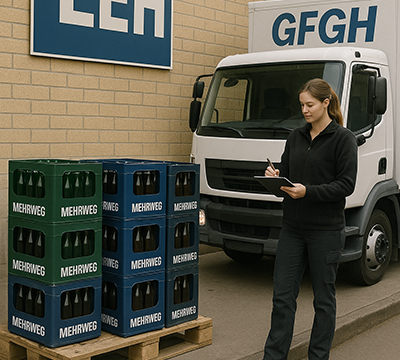
Surprising but true: The returnable beverage industry manages its collection operations using manual counting and billing processes. That's due to the way it historically developed. Since there are no system operators, only bottlers and wholesale logistics providers, returnable bottles are, for accounting and practical purposes, resold to every single partner in the system.
In Germany, no single actor has a transparent overall view, yet the historical size and established processes allow it to function with more than 3 billion containers and return rates >95%. New reuse systems can hardly become economically competitive with such manual capture and billing processes. Scaling threatens to fail due to the manual effort required of system actors.

AI assisted
PROBLEM ORIGIN
Data opacity through manual processes
Circular processes are characterised by collection and service. To automate them requires two data sets that enable full system transparency:
1. Actors in the system and
2. Inventory in the system.Actor data sets are familiar from the linear model: nothing works without delivery and billing addresses. Inventory data is also taken for granted until manufacturers hand off responsibility at sale: "Good luck with disposal later". In reuse systems, linking these data sets enables full inventory transparency: in warehouses, in deliveries, in reverse logistics, and at cleaning lines. The automation of circular inventory management and deposit management becomes possible.
Effort down … costs down
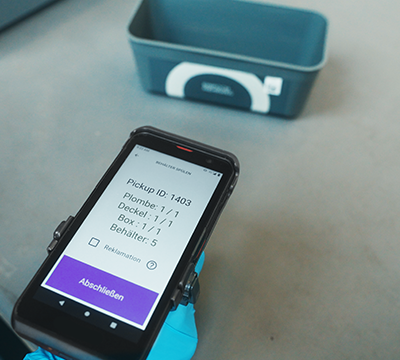
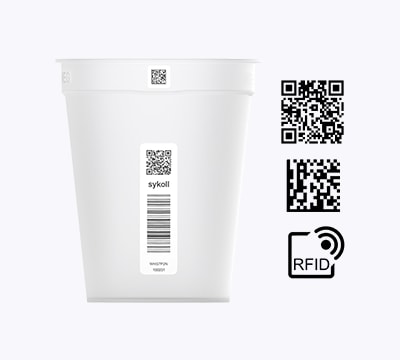
Inventory capture and settlement are significant cost drivers in the Manage value domain. Through serialisation and tracing of packaging, precise real-time inventory management becomes possible. Packaging should therefore be captured as automatically as possible. Scanning of codes or via RFID is done through handhelds, apps or gates.
Scanning does not need to occur along the entire loop, but at minimum in the Service value domain: From which partner in the Collect domain comes the packaging and to which partner is packaging sent in the Reuse domain? Naturally, process optimisation and costs must be balanced, but the rule is: the more capture points, the more transparency and thus increasing automation.
Scanning must occur in the Service value domain, what else is possible?

REUSE - Data capture in the context of reuse
- Brands: Digital product passports of fill products at the filling line
- Retailers at checkout:
- Capture of packaging types
- Deposit activation
- Brands & retailers:
- Gamification and bonification via scan prompts to consumers
- Consumers: Capture of ecological contribution

COLLECT - Data capture in the context of collection
- Deposit machine:
- Deposit deactivation to prevent fraud
- Automated deposit settlement in conjunction with data capture at cleaning lines
- Alternatively no data capture, but identification of collection point partner on consolidation units

SERVICE - Data capture in the context of pool care
Cleaning line:
- Tracing packaging from the Collect value domain
- Tracing packaging towards the Reuse value domain
- Through repeated return to cleaning lines, full system and partner transparency regarding:
- Return rate
- Loss rate
- Active pool size
- Number of cycles
Once a system operator has defined the data capture points for actively managing a pool and its interaction with the other value domains, the system is ready to scale in a software-supported, systematic and maximally transparent way. Additional data points can of course be added at a later stage.

Continue to the value domains



Contact
Manage
Managing circular processes manually?
Surprising but true: The returnable beverage industry manages its collection operations using manual counting and billing processes. That's due to the way it historically developed. Since there are no system operators, only bottlers and wholesale logistics providers, returnable bottles are, for accounting and practical purposes, resold to every single partner in the system.
In Germany, no single actor has a transparent overall view, yet the historical size and established processes allow it to function with more than 3 billion containers and return rates >95%. New reuse systems can hardly become economically competitive with such manual capture and billing processes. Scaling threatens to fail due to the manual effort required of system actors.
AI assisted
PROBLEM ORIGIN
Data opacity through manual processes
Circular processes are characterised by collection and service. To automate them requires two data sets that enable full system transparency:
1. Actors in the system and
2. Inventory in the system.Actor data sets are familiar from the linear model: nothing works without delivery and billing addresses. Inventory data is also taken for granted until manufacturers hand off responsibility at sale: "Good luck with disposal later". In reuse systems, linking these data sets enables full inventory transparency: in warehouses, in deliveries, in reverse logistics, and at cleaning lines. The automation of circular inventory management and deposit management becomes possible.
Effort down … costs down
Inventory capture and settlement are significant cost drivers in the Manage value domain. Through serialisation and tracing of packaging, precise real-time inventory management becomes possible. Packaging should therefore be captured as automatically as possible. Scanning of codes or via RFID is done through handhelds, apps or gates.
Scanning does not need to occur along the entire loop, but at minimum in the Service value domain: From which partner in the Collect domain comes the packaging and to which partner is packaging sent in the Reuse domain? Naturally, process optimisation and costs must be balanced, but the rule is: the more capture points, the more transparency and thus increasing automation.
Scanning must occur in the Service value domain, what else is possible?
REUSE - Data capture in the context of reuse
- Brands: Digital product passports of fill products at the filling line
- Retailers at checkout:
- Capture of packaging types
- Deposit activation
- Brands & retailers:
- Gamification and bonification via scan prompts to consumers
- Consumers: Capture of ecological contribution
COLLECT - Data capture in the context of collection
- Deposit machine:
- Deposit deactivation to prevent fraud
- Automated deposit settlement in conjunction with data capture at cleaning lines
- Alternatively no data capture, but identification of collection point partner on consolidation units
SERVICE - Data capture in the context of pool care
Cleaning line:
- Tracing packaging from the Collect value domain
- Tracing packaging towards the Reuse value domain
- Through repeated return to cleaning lines, full system and partner transparency regarding:
- Return rate
- Loss rate
- Active pool size
- Number of cycles
Once a system operator has defined the data capture points for actively managing a pool and its interaction with the other value domains, the system is ready to scale in a software-supported, systematic and maximally transparent way. Additional data points can of course be added at a later stage.

Continue to the value domains


EN
Contact
Manage
Managing circular processes manually?
Surprising but true: The returnable beverage industry manages its collection operations using manual counting and billing processes. That's due to the way it historically developed. Since there are no system operators, only bottlers and wholesale logistics providers, returnable bottles are, for accounting and practical purposes, resold to every single partner in the system.
AI assisted
In Germany, no single actor has a transparent overall view, yet the historical size and established processes allow it to function with more than 3 billion containers and return rates >95%. New reuse systems can hardly become economically competitive with such manual capture and billing processes. Scaling threatens to fail due to the manual effort required of system actors.
PROBLEM ORIGIN
Data opacity through manual processes
Circular processes are characterised by collection and service. To automate them requires two data sets that enable full system transparency:
1. Actors in the system and
2. Inventory in the system.Actor data sets are familiar from the linear model: nothing works without delivery and billing addresses. Inventory data is also taken for granted until manufacturers hand off responsibility at sale: "Good luck with disposal later". In reuse systems, linking these data sets enables full inventory transparency: in warehouses, in deliveries, in reverse logistics, and at cleaning lines. The automation of circular inventory management and deposit management becomes possible.
Effort down … costs down
Inventory capture and settlement are significant cost drivers in the Manage value domain. Through serialisation and tracing of packaging, precise real-time inventory management becomes possible. Packaging should therefore be captured as automatically as possible. Scanning of codes or via RFID is done through handhelds, apps or gates.
Scanning does not need to occur along the entire loop, but at minimum in the Service value domain: From which partner in the Collect domain comes the packaging and to which partner is packaging sent in the Reuse domain? Naturally, process optimisation and costs must be balanced, but the rule is: the more capture points, the more transparency and thus increasing automation.
Scanning must occur in the Service value domain, what else is possible?
REUSE - Data capture in the context of reuse
- Brands: Digital product passports of fill products at the filling line
- Retailers at checkout:
- Capture of packaging types
- Deposit activation
- Brands & retailers:
- Gamification and bonification via scan prompts to consumers
- Consumers: Capture of ecological contribution
COLLECT - Data capture in the context of collection
- Deposit machine:
- Deposit deactivation to prevent fraud
- Automated deposit settlement in conjunction with data capture at cleaning lines
- Alternatively no data capture, but identification of collection point partner on consolidation units
SERVICE - Data capture in the context of pool care
Cleaning line:
- Tracing packaging from the Collect value domain
- Tracing packaging towards the Reuse value domain
- Through repeated return to cleaning lines, full system and partner transparency regarding:
- Return rate
- Loss rate
- Active pool size
- Number of cycles
Once a system operator has defined the data capture points for actively managing a pool and its interaction with the other value domains, the system is ready to scale in a software-supported, systematic and maximally transparent way. Additional data points can of course be added at a later stage.

Continue to the value domains

EN
Contact
Manage
Managing circular processes manually?
Surprising but true: The returnable beverage industry manages its collection operations using manual counting and billing processes. That's due to the way it historically developed. Since there are no system operators, only bottlers and wholesale logistics providers, returnable bottles are, for accounting and practical purposes, resold to every single partner in the system.
AI assisted
In Germany, no single actor has a transparent overall view, yet the historical size and established processes allow it to function with more than 3 billion containers and return rates >95%. New reuse systems can hardly become economically competitive with such manual capture and billing processes. Scaling threatens to fail due to the manual effort required of system actors.
PROBLEM ORIGIN
Data opacity through manual processes
Circular processes are characterised by collection and service. To automate them requires two data sets that enable full system transparency:
1. Actors in the system and
2. Inventory in the system.Actor data sets are familiar from the linear model: nothing works without delivery and billing addresses. Inventory data is also taken for granted until manufacturers hand off responsibility at sale: "Good luck with disposal later". In reuse systems, linking these data sets enables full inventory transparency: in warehouses, in deliveries, in reverse logistics, and at cleaning lines. The automation of circular inventory management and deposit management becomes possible.
Effort down … costs down
Inventory capture and settlement are significant cost drivers in the Manage value domain. Through serialisation and tracing of packaging, precise real-time inventory management becomes possible. Packaging should therefore be captured as automatically as possible. Scanning of codes or via RFID is done through handhelds, apps or gates.
Scanning does not need to occur along the entire loop, but at minimum in the Service value domain: From which partner in the Collect domain comes the packaging and to which partner is packaging sent in the Reuse domain? Naturally, process optimisation and costs must be balanced, but the rule is: the more capture points, the more transparency and thus increasing automation.
Scanning must occur in the Service value domain, what else is possible?
REUSE - Data capture in the context of reuse
- Brands: Digital product passports of fill products at the filling line
- Retailers at checkout:
- Capture of packaging types
- Deposit activation
- Brands & retailers:
- Gamification and bonification via scan prompts to consumers
- Consumers: Capture of ecological contribution
COLLECT - Data capture in the context of collection
- Deposit machine:
- Deposit deactivation to prevent fraud
- Automated deposit settlement in conjunction with data capture at cleaning lines
- Alternatively no data capture, but identification of collection point partner on consolidation units
SERVICE - Data capture in the context of pool care
Cleaning line:
- Tracing packaging from the Collect value domain
- Tracing packaging towards the Reuse value domain
- Through repeated return to cleaning lines, full system and partner transparency regarding:
- Return rate
- Loss rate
- Active pool size
- Number of cycles
Once a system operator has defined the data capture points for actively managing a pool and its interaction with the other value domains, the system is ready to scale in a software-supported, systematic and maximally transparent way. Additional data points can of course be added at a later stage.
